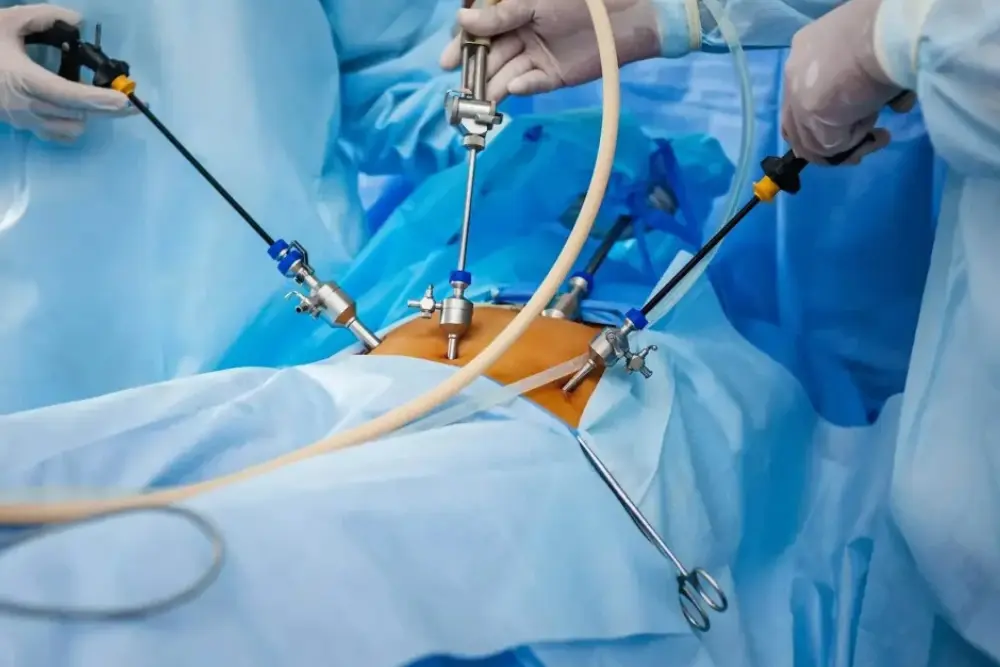
Laparoscopic Ovarian Tumor Surgery
Laparoscopic (Keyhole)
Advanced, minimally invasive treatment for ovarian tumors and cysts — precise diagnosis, fertility-conscious surgery, and a faster path back to everyday life.
Medically reviewed by Dr. S M Sarwar, General & Laparoscopic Surgeon • 15+ years experience • Updated
July 2026
30–60 min
Surgery Duration
1–2 days
Hospital Stay
2–3 weeks
Back to Normal Activity
OVERVIEW
What Is an Ovarian Tumor?
The ovaries are small reproductive organs located on either side of the uterus, and it's fairly common for growths — cysts or tumors — to develop on them. Most are benign and clear up on their own, but some can grow, cause persistent pain, or raise concern for malignancy, which is why surgical evaluation matters. Laparoscopic ovarian tumor surgery uses small incisions, a magnified camera view, and specialized instruments to remove the tumor with high precision — sparing healthy ovarian tissue wherever possible and preserving fertility.
CANDIDACY
Who Is a Good Candidate?
Persistent pelvic pain, abdominal bloating, irregular cycles, or discomfort during intercourse can point to an ovarian tumor or cyst. When an ultrasound or CT scan confirms a growth — especially one that's enlarging, painful, or suspicious in appearance — surgical evaluation becomes the safest next step.
Functional Ovarian Cysts
Dermoid Cysts (Mature Teratomas)
Endometriomas
Cystadenomas
Benign Solid Ovarian Tumors
Tumors Requiring Further Evaluation
BENEFITS
Key Benefits of Laparoscopic Surgery
✓
Small incisions with minimal scarring
✓
Noticeably less post-operative pain
✓
Reduced blood loss during surgery
✓
Lower risk of wound infection
✓
Shorter hospital discharge time
✓
Quicker return to daily activities
✓
Better cosmetic outcome
✓
Faster overall recovery
PROCEDURE
What Happens During Surgery?
1
Anesthesia
General anesthesia is administered so the procedure is entirely pain-free.
2
Small Incisions
A few small incisions are made in the abdomen for camera and instrument access.
3
Tumor Removal
The tumor or cyst is carefully removed while preserving as much healthy ovarian tissue as possible.
4
Closure & Pathology
Incisions are closed, and the removed tissue is sent for lab analysis to confirm the diagnosis.
GOOD TO KNOW
As with any surgical procedure, laparoscopic ovarian tumor surgery carries a few uncommon risks, which are discussed in detail during your consultation:
•Excessive abdominal pain
•Fever
•Persistent vomiting
•Heavy vaginal bleeding
•Increasing redness or swelling around the incision
•Pus or discharge from the wound
•Difficulty passing urine
•Shortness of breath
RECOVERY
What to Expect Afterward?
Day 0 — Surgery Day
Hospital discharge within 24–48 hours; short rest period as anesthesia wears off.
Days 3–7
Walking encouraged from the day after surgery; light activities resumed within 3–7 days.
Week 2
Return to office-based work for most patients.
Week 2–3
Full recovery, with sexual activity generally safe to resume after 2–3 weeks per your surgeon's advice.
FAQ
Common Questions
The surgery is performed under general anesthesia, so patients feel no pain during the operation. Mild soreness around the incision sites is normal and usually improves within a few days.
Most patients are discharged within 24–48 hours after surgery, depending on their recovery progress.
Whenever possible, surgeons preserve healthy ovarian tissue. The effect on fertility depends on the type, size, and location of the tumor — your surgeon can advise on your specific case.
Want the full picture? Read our complete guide to ovarian tumor diagnosis, treatment & recovery.
This page is for general information only and does not replace an in-person medical consultation. Treatment recommendations vary by individual case — please book a consultation with Dr. S M Sarwar for personalized advice.