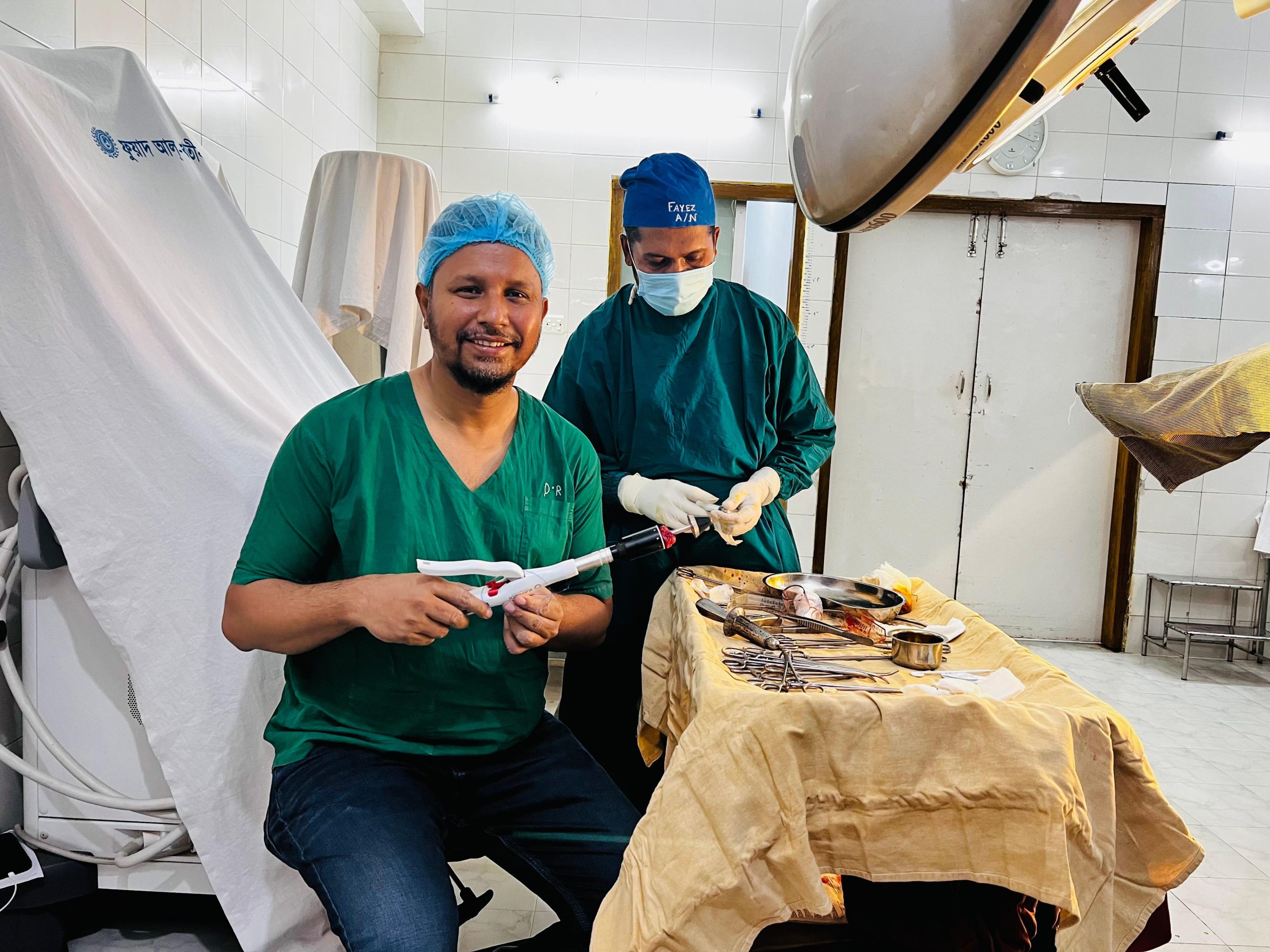
Longo (Stapler) Piles Surgery
Longo (Stapler) / PPH
A modern, cutting-free surgical option for lasting relief from advanced piles — less pain, faster recovery, and minimal disruption to daily life.
Medically reviewed by Dr. S M Sarwar, General & Laparoscopic Surgeon • 15+ years experience • Updated
July 2026
20–40 min
Surgery Duration
Overnight
Hospital Stay
1–2 weeks
Back to Normal Activity
OVERVIEW
A Modern Surgical Option for Lasting Relief from Advanced Piles
Longo (Stapler) surgery, also known as Procedure for Prolapse and Hemorrhoids (PPH), is a modern surgical approach for advanced piles that repositions prolapsing hemorrhoidal tissue and reduces its blood supply — all without cutting the sensitive anal skin. Unlike conventional hemorrhoidectomy, which removes hemorrhoidal tissue through an external wound, Longo (Stapler) surgery works higher inside the anal canal, resulting in significantly less postoperative pain, minimal external wound, and a faster return to daily activities.
CANDIDACY
Who May Be a Good Candidate for Longo (Stapler) Surgery?
Persistent prolapsing hemorrhoids that no longer respond to diet, lifestyle changes, or conservative treatment — especially Grade II to selected Grade IV internal hemorrhoids — are usually good candidates for Longo (Stapler) surgery, which repositions prolapsed tissue while reducing blood supply to the hemorrhoidal cushions.
Grade III Internal Hemorrhoids
Selected Grade IV Internal Hemorrhoids
Recurrent Prolapsing Hemorrhoids
Circumferential Hemorrhoidal Prolapse
BENEFITS
Benefits of Longo (Stapler) Piles Surgery
✓
Less postoperative pain
✓
No large external wound
✓
Shorter hospital stay
✓
Faster return to normal activities
✓
Preservation of normal anal anatomy
✓
Effective treatment for prolapsing internal hemorrhoids
PROCEDURE
How Is Longo (Stapler) Surgery Performed?
1
Anesthesia
Spinal or general anesthesia is administered so the procedure is completely pain-free.
2
Positioning
The patient is positioned appropriately for clear surgical access to the anal canal.
3
Placement of the Stapling Device
A specially designed circular stapling instrument is gently introduced into the anal canal.
4
Tissue Repositioning
A small ring of tissue is removed from the rectum above the hemorrhoids, repositioning the prolapsed hemorrhoidal tissue back into its normal position while reducing blood supply.
5
Completion of the Procedure
The stapling device is removed, and the surgical site is carefully checked, with the patient monitored for recovery.
GOOD TO KNOW
As with any surgical procedure, Longo (Stapler) surgery carries some general risks. These are uncommon and are discussed in detail during your consultation:
•Mild bleeding
•Temporary discomfort or urgency
•Difficulty passing urine (temporary
•Recurrence of hemorrhoids in some cases
•Reaction to anesthesia (screened for beforehand)
RECOVERY
Recovery After Longo (Stapler) Surgery
First 24 Hours
Mild discomfort, light bleeding, and temporary swelling may occur.
First Week
Most patients can walk comfortably and gradually return to light daily activities.
2–4 Weeks
Healing continues, and symptoms usually improve significantly.
6–8 Weeks
Most patients have recovered well and can resume their normal lifestyle, depending on their individual case.
FAQ
Common Questions
Most patients experience less postoperative pain than conventional hemorrhoid surgery because the procedure is performed higher in the anal canal, away from the more sensitive skin.
The procedure usually takes around 20 to 40 minutes, depending on the individual case.
Most patients can return home on the same day, provided there are no complications.
Want to know more? Read the complete guide to Longo (Stapler) piles surgery, benefits & recovery.
This page is for general information only and does not replace an in-person medical consultation. Treatment recommendations vary by individual case — please book a consultation with Dr. S M Sarwar for personalized advice.