Hernia Surgery
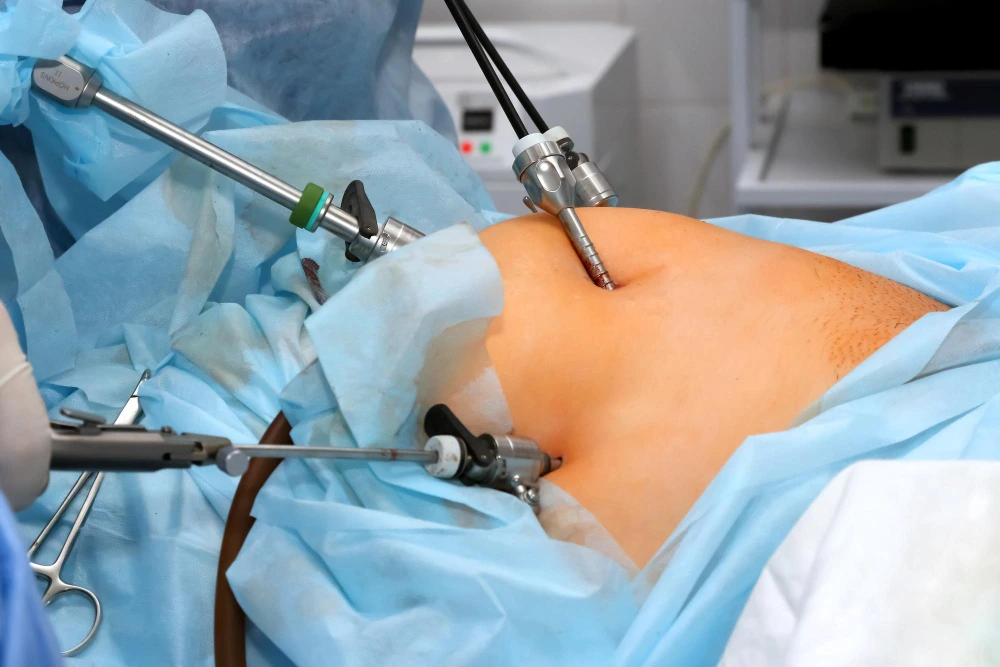
Laparoscopic (Keyhole)
Minimally invasive repair for inguinal, umbilical, and incisional hernias — smaller scars, less pain, and a faster return to normal life.
Medically reviewed by Dr. S M Sarwar, General & Laparoscopic Surgeon • 15+ years experience • Updated
July 2026
30-60 min
Surgery Duration
Same day
Hospital Discharge
3–7 days
Back to Light Work
OVERVIEW
What Is a Hernia?
A hernia develops when an internal tissue or organ pushes through a weak spot in the surrounding muscle wall, most often in the abdomen or groin. It typically appears as a visible bulge that may grow larger over time, particularly with standing, coughing, or heavy lifting. Left untreated, a hernia does not resolve on its own and can gradually increase in size — which is why most hernias are recommended for surgical repair once diagnosed.
CANDIDACY
Who Needs This?
A bulge in the abdomen or groin that grows with standing, coughing, or lifting — accompanied by discomfort, heaviness, or a pulling sensation — usually indicates a hernia requiring surgical repair. A consultation with imaging (ultrasound, where needed) confirms the type and size before planning surgery.
Inguinal Hernia
Umbilical Hernia
Incisional Hernia
Hiatal Hernia
BENEFITS
Why Laparoscopic Repair?
✓
2–3 small incisions instead of one large cut
✓
Mesh reinforcement to prevent recurrence
✓
Significantly less post-operative pain
✓
Minimal, barely visible scarring
PROCEDURE
How It's Done?
1
Anesthesia
General anesthesia is administered so the procedure is completely pain-free.
2
Small Incisions
2–3 small (5–10mm) incisions are made in the abdominal wall.
3
Camera-Guided Repair
A laparoscope guides precise placement of surgical mesh to reinforce the weakened tissue.
4
Closure & Recovery
Incisions are closed with dissolvable sutures; most patients go home the same day.
GOOD TO KNOW
As with any surgical procedure, laparoscopic hernia repair carries some general risks. These are uncommon and are discussed in detail during your consultation:
•Infection at the incision site
•Temporary swelling or bruising
•Rare recurrence, which mesh reinforcement significantly reduces
•Reaction to anesthesia (screened for beforehand)
RECOVERY
What to Expect Afterward?
Day 0 — Surgery Day
Discharged same day; short rest period for anesthesia to wear off.
Days 1–3
Mild discomfort managed with prescribed pain relief; light walking encouraged
Week 1
Return to desk work and most daily activities.
Weeks 2–4
Gradual return to exercise and heavy lifting, guided by follow-up review.
FAQ
Common Questions
For most hernia types, yes — it generally means less pain, a faster return to activity, and smaller scars. Your surgeon will confirm the best approach for your specific case.
Mesh reinforcement significantly lowers the chance of recurrence compared to repair without mesh, though no surgery carries a zero-percent guarantee.
Most patients can drive within a week and resume light exercise after 2–3 weeks, with full activity typically cleared by week 4–6 at follow-up.
Want to know more? Read the complete guide on symptoms, causes & recovery.
This page is for general information only and does not replace an in-person medical consultation. Treatment recommendations vary by individual case — please book a consultation with Dr. S M Sarwar for personalized advice.