
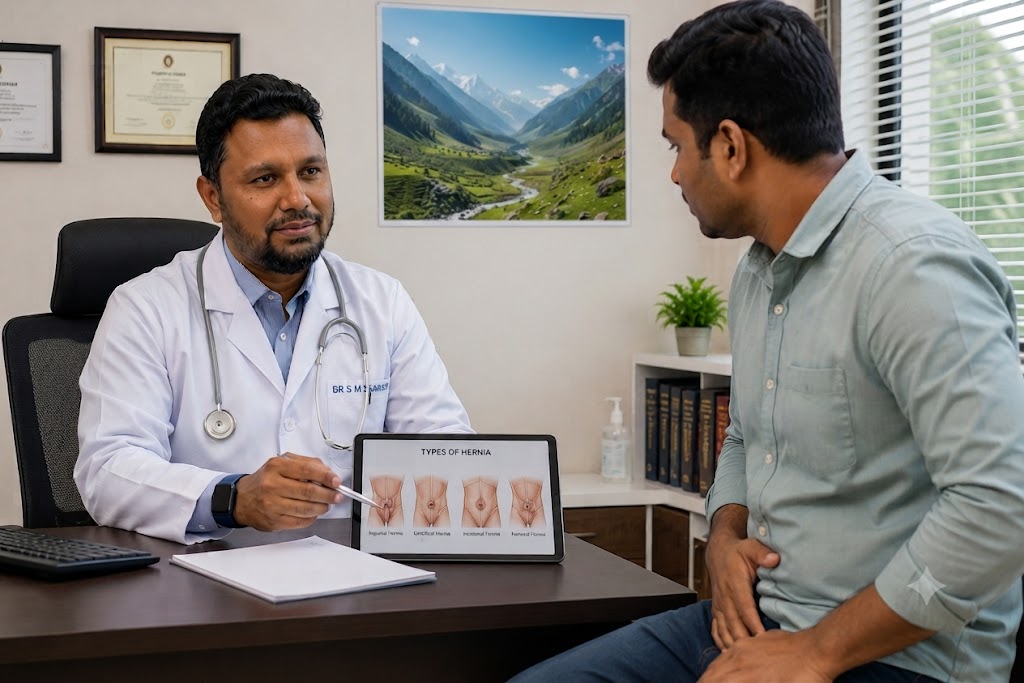
Understanding Hernia: Why Early Treatment Matters
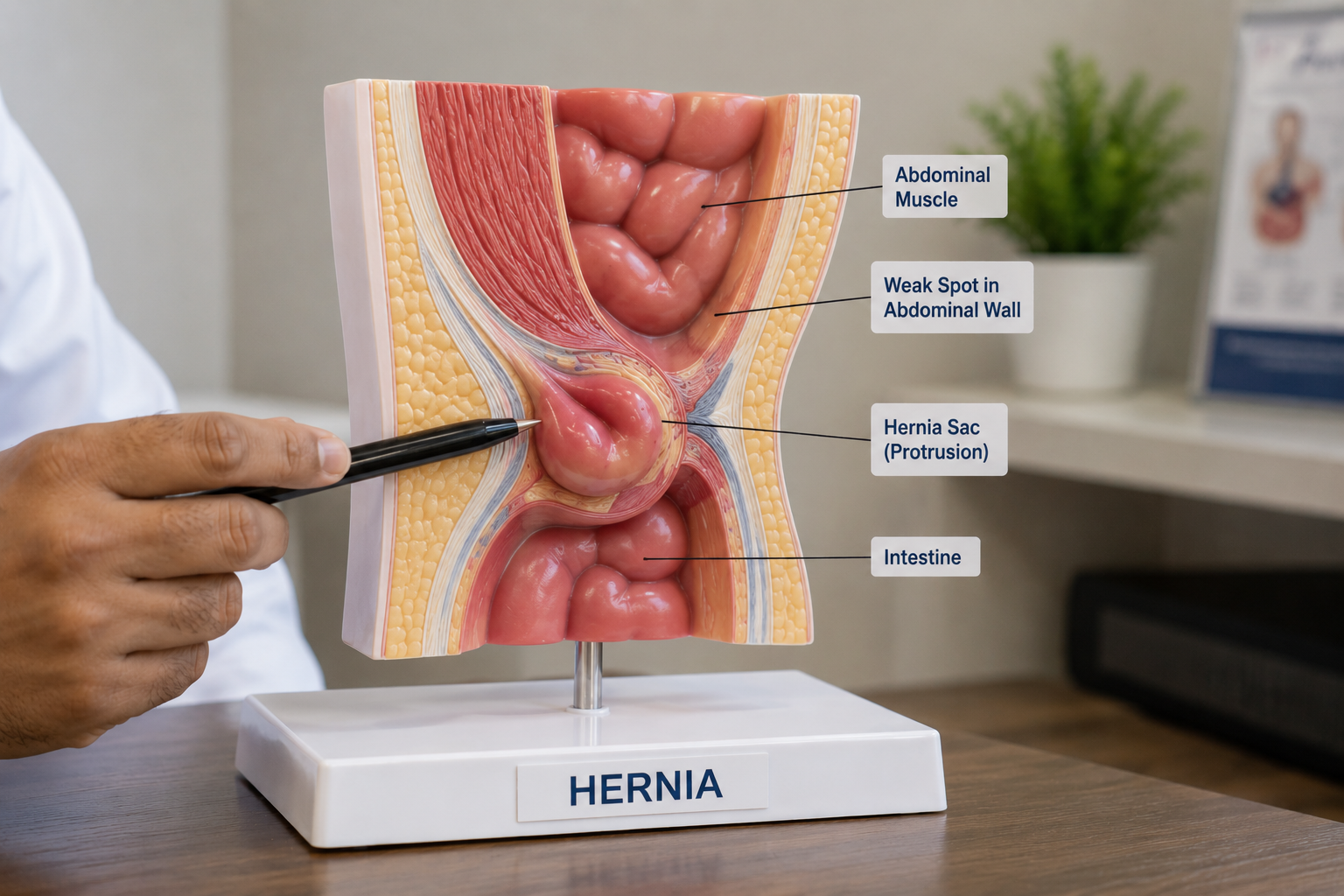
A hernia is a common condition that occurs when an internal organ or fatty tissue pushes through a weakened area of the abdominal wall or surrounding muscles. Although a hernia may initially cause only mild discomfort or a small visible bulge, it does not heal on its own and often becomes larger over time.
Many people delay treatment because the symptoms seem manageable. However, untreated hernias can lead to serious complications, including bowel obstruction or strangulation, which may require emergency surgery.
With modern surgical techniques, laparoscopic hernia repair has become a safe and minimally invasive treatment option that offers smaller incisions, less pain, faster recovery, and excellent long-term results.
What Is a Hernia?
A hernia develops when part of an internal organ or fatty tissue pushes through a weak area in the muscle or connective tissue that normally keeps it in place. Hernias most commonly occur in the groin or abdominal wall and may gradually increase in size if left untreated.
Common Types of Hernia
✔ Inguinal Hernia
✔ Femoral Hernia
✔ Umbilical Hernia
✔ Incisional Hernia
✔ Hiatal Hernia
Common Symptoms
✔ A noticeable bulge in the abdomen or groin
✔ Pain while coughing, lifting, or bending
✔ Burning or aching sensation
✔ Feeling of heaviness
✔ Swelling that becomes more obvious when standing
Why Is Laparoscopic Hernia Surgery Recommended?
Laparoscopic hernia repair is a modern minimally invasive surgical technique performed through a few small incisions using a high-definition camera and specialized surgical instruments.
Compared with conventional open surgery, laparoscopic repair offers improved precision and faster recovery for many patients.
Surgery is usually recommended when:
✔ The hernia causes pain or discomfort
✔ The swelling continues to increase
✔ Daily activities become difficult
✔ The hernia cannot be pushed back
✔ There is a risk of strangulation
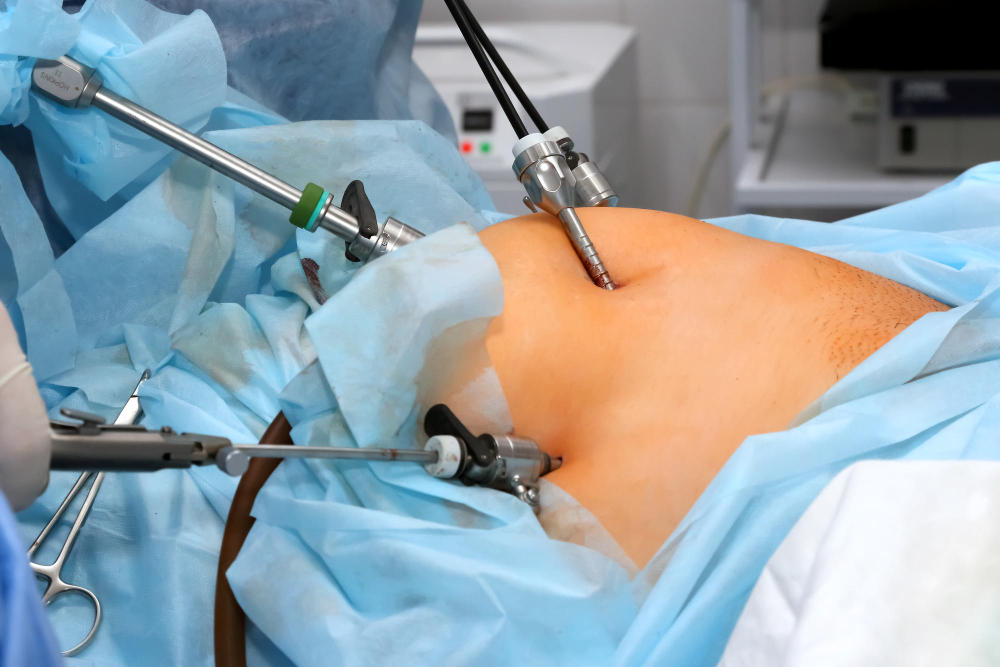
Key Benefits of Laparoscopic Hernia Repair
Patients often experience several advantages, including:
✅ Smaller incisions
✅ Less postoperative pain
✅ Lower risk of wound infection
✅ Faster return to normal activities
✅ Shorter hospital stay
✅ Better cosmetic results
✅ Earlier return to work
Who Is a Good Candidate for Laparoscopic Hernia Surgery?
Laparoscopic hernia repair may be suitable for:
✔ Adults with inguinal or ventral hernias
✔ Patients with bilateral hernias
✔ Recurrent hernias after previous surgery
✔ Individuals seeking faster recovery
Your surgeon will recommend the most appropriate treatment after evaluating your medical condition.
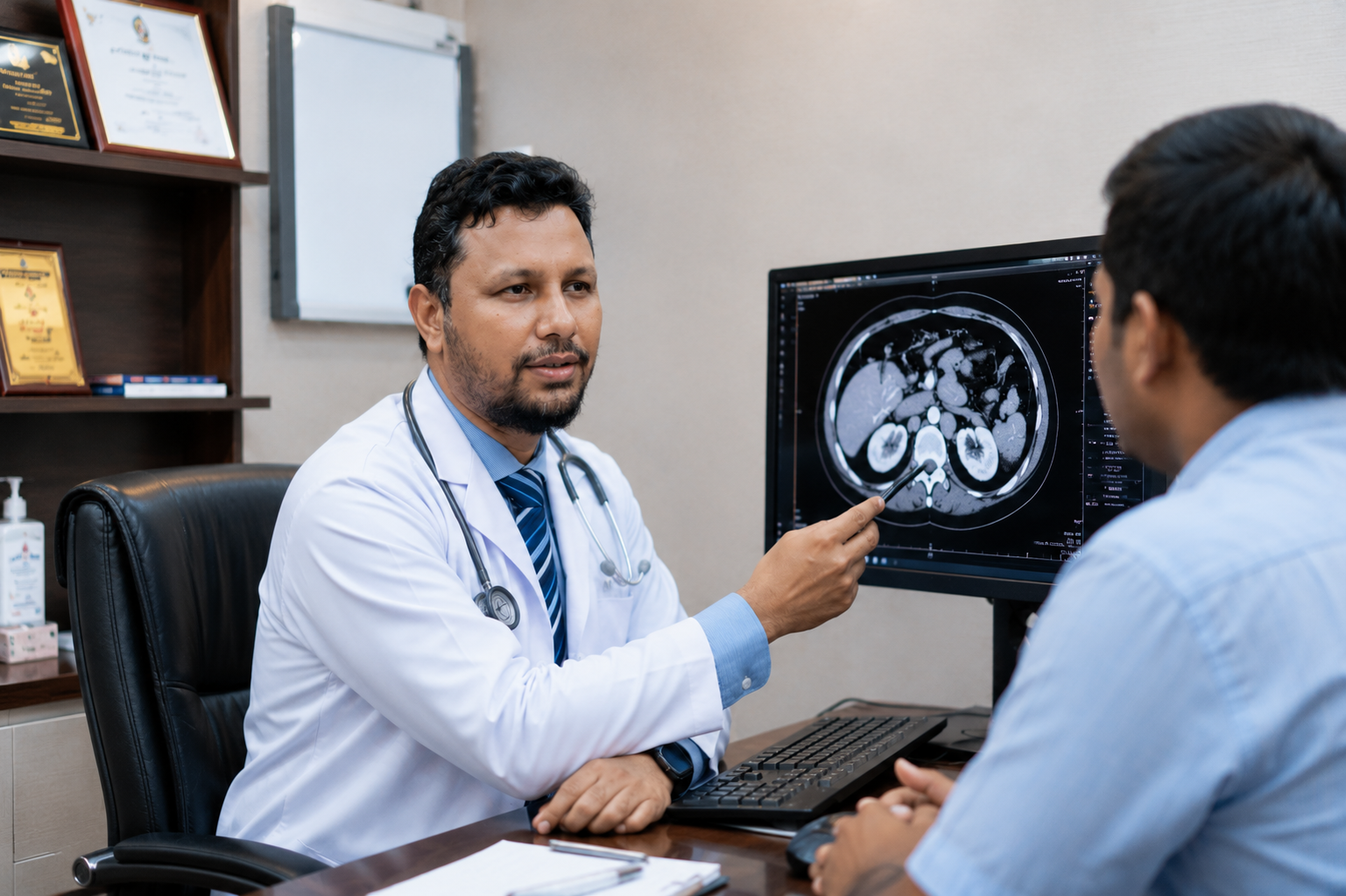
What Tests Are Needed Before Surgery?
Before surgery, your surgeon may recommend:
✔ Physical examination
✔ Blood tests
✔ Ultrasound (when indicated)
✔ CT Scan (if necessary)
✔ ECG and other fitness assessments
These tests help confirm the diagnosis and ensure that surgery can be performed safely.
How Is Laparoscopic Hernia Surgery Performed?
The procedure is carried out under general anesthesia.
Step 1
Small incisions are made in the abdomen.
Step 2
A laparoscope (tiny camera) is inserted.
Step 3
The hernia is carefully repositioned.
Step 4
A surgical mesh is placed to reinforce the weakened abdominal wall when appropriate.
Step 5
The instruments are removed, and the small incisions are closed.
Most procedures are completed within 45–90 minutes, depending on the complexity of the hernia.
Is Laparoscopic Hernia Surgery Painful?
Because the operation is performed under general anesthesia, patients do not feel pain during surgery.
After the procedure, mild soreness around the incision sites is common and can usually be managed with prescribed pain medication. Most patients begin walking on the same day of surgery.
Recovery Timeline
Recovery varies from person to person, but most patients can expect:
✔ Walking within a few hours
✔ Hospital discharge within 24 hours
✔ Light daily activities in 3–5 days
✔ Office work in 1–2 weeks
✔ Heavy physical activity after 4–6 weeks (as advised by the surgeon)
Post-Surgery Care Instructions
To promote faster healing:
✔ Keep the incision clean and dry
✔ Take medications as prescribed
✔ Avoid heavy lifting
✔ Eat a balanced, fiber-rich diet
✔ Stay hydrated
✔ Attend scheduled follow-up appointments
When Should You Contact Your Surgeon?
Seek medical attention immediately if you notice:
🚨 Severe abdominal pain
🚨 High fever
🚨 Persistent vomiting
🚨 Redness, swelling, or discharge from the incision
🚨 Difficulty passing urine
🚨 Increasing swelling at the surgical site
Frequently Asked Questions
Can a hernia heal without surgery?
No. Hernias do not heal on their own and usually become larger over time.
Is laparoscopic hernia surgery safe?
Yes. It is a well-established and widely performed procedure with excellent success rates when performed by an experienced laparoscopic surgeon.
How long does the surgery take?
Most procedures take between 45 and 90 minutes.
When can I return to work?
Many patients return to office work within 1–2 weeks, depending on their recovery and job requirements.
Can a hernia come back after surgery?
Although recurrence is uncommon, following your surgeon’s advice and avoiding heavy lifting during recovery can help reduce the risk.
Consult an Experienced Laparoscopic Surgeon
Early diagnosis and timely treatment can help prevent complications and improve long-term outcomes. If you have symptoms of a hernia or have been advised to undergo surgery, consult an experienced laparoscopic surgeon to discuss the most suitable treatment option.
📞 Book Your Appointment Today
Medical Disclaimer
This article is intended for educational and informational purposes only and should not be considered a substitute for professional medical advice, diagnosis, or treatment. Every patient is unique, and treatment recommendations vary depending on individual medical history, examination findings, and diagnostic results. Always consult a qualified healthcare professional for personalized medical advice. If you experience severe pain, fever, difficulty passing urine, heavy bleeding, or any medical emergency, seek immediate medical attention.


