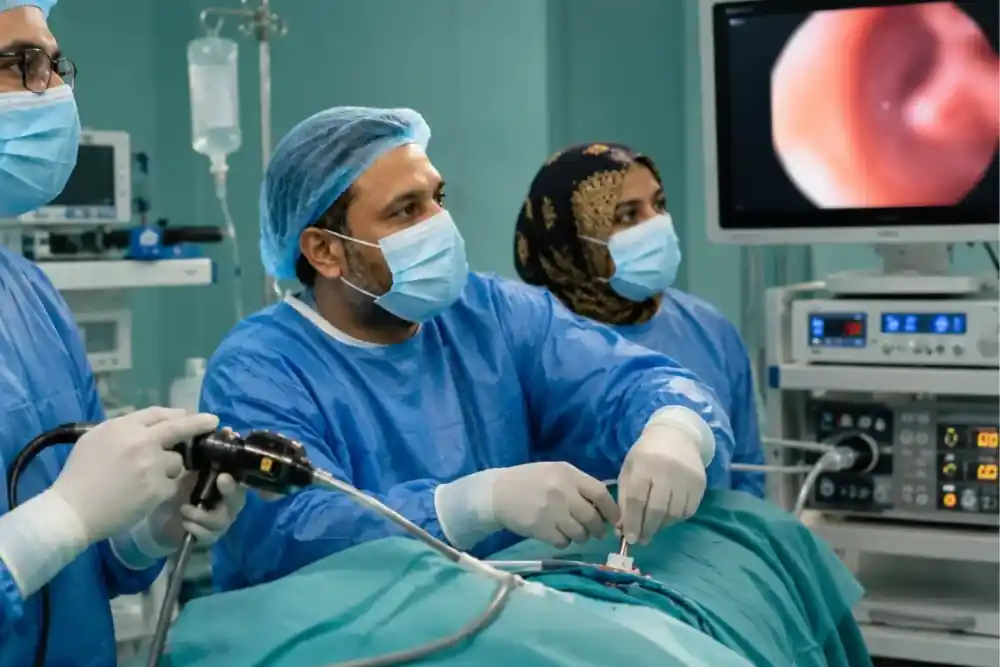
Rectal Polyp Removal
Colonoscopic / Endoscopic Polypectomy
Safe, minimally invasive removal of rectal polyps through colonoscopy or endoscopic surgery — preventing progression and lowering long-term colorectal cancer risk.
Medically reviewed by Dr. S M Sarwar, General & Laparoscopic Surgeon • 15+ years experience • Updated
July 2026
20–45 min
Procedure Duration
Same day
Hospital Stay
1–2 weeks
Back to Normal Activity
OVERVIEW
Overview
Rectal polyps are small growths that form on the inner lining of the rectum. They usually cause no symptoms early on, but can grow over time and, in some cases, progress into colorectal cancer if left untreated. Most polyps can be removed endoscopically during a colonoscopy; larger, more complex, or advanced polyps may require a surgical approach, guided by a specialist to determine the safest and most effective method.
CANDIDACY
Who Needs This?
Rectal bleeding, a change in bowel habits, or a polyp found during colonoscopy — especially in patients with a family history of polyps or colorectal cancer, or those over 50 — usually means removal is recommended to prevent progression to cancer.
Adenomatous Polyps
Large or Complex Polyps
Recurrent Polyps
Polyps With Suspicious/Advanced Features
BENEFITS
Why Modern Polyp Removal?
✓
Minimally invasive, often done without incisions
✓
Removes polyps before they can turn cancerous
✓
Shorter recovery than conventional surgery
✓
Preserved bowel function and continence
✓
Lower risk of wound-related complications
✓
Faster return to normal life
PROCEDURE
How Does the Procedure Work?
1
Preoperative Assessment
Medical history, bloodwork, and imaging are reviewed to plan the safest approach for polyp removal.
2
Anesthesia
Local, sedation, or general anesthesia is administered depending on the procedure type, so it remains comfortable throughout.
3
Polyp Removal
Using colonoscopic or surgical techniques, the polyp is carefully removed while protecting the surrounding tissue.
4
Tissue Examination
The removed specimen is sent for pathology to confirm it has been fully removed and to check for any abnormal cells.
GOOD TO KNOW
As with any procedure involving polyp removal, rectal polyp surgery carries some general risks. These are uncommon and are discussed in detail during your consultation:
•Bleeding at the removal site
•Infection
•Bowel perforation (rare)
•Recurrence of new polyps over time
RECOVERY
Recovery After Polyp Surgery
Day 0 — Procedure Day
Short observation period before discharge the same day.
Days 1–3
Mild discomfort or bloating; light diet and rest recommended.
Week 1
Return to normal diet and most daily activities.
Week 1–2
Full recovery, with follow-up colonoscopy scheduling guided by your surgeon.
FAQ
Common Questions
Most polyps can be removed endoscopically without open surgery; surgery is reserved for larger or more complex cases.
Most colonoscopic polyp removals take 20 to 45 minutes, depending on the number and size of polyps.
Some types of polyps, if left untreated, can gradually develop into colorectal cancer over time, which is why timely removal is recommended.
Yes, a follow-up colonoscopy is typically recommended to check for new or recurring polyps.
Want to know more? Read the complete guide on rectal polyps, symptoms & when surgery is needed.
This page is for general information only and does not replace an in-person medical consultation. Treatment recommendations vary by individual case — please book a consultation with Dr. S M Sarwar for personalized advice.