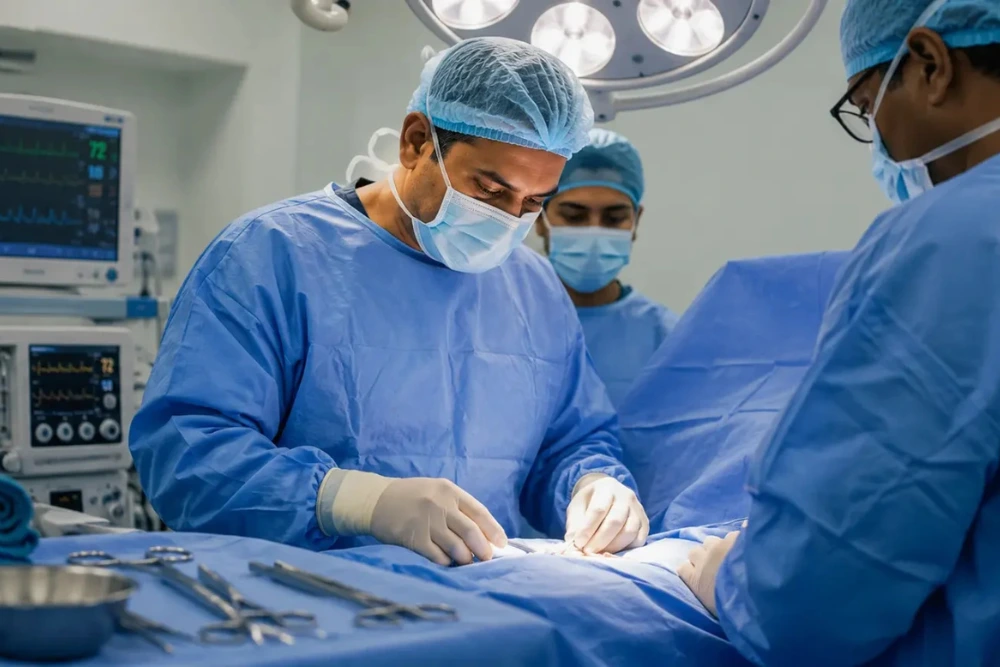
Testicular Tumor / Hematoma Surgery
Testicular Surgery
Expert surgical evaluation and treatment for testicular tumors and hematomas — ensuring accurate diagnosis, timely intervention, organ preservation whenever possible, and a safe recovery.
Medically reviewed by Dr. S M Sarwar, General & Laparoscopic Surgeon • 15+ years experience • Updated
July 2026
30–90 min
Surgery Duration
1–2 days
Hospital Stay
2–4 weeks
Back to Normal Activity
OVERVIEW
What Is a Testicular Tumor or Hematoma?
A testicular tumor is an abnormal growth inside the testicle that may be benign or cancerous. A testicular hematoma is a collection of blood within or around the testicle, usually following injury or trauma. Both conditions can cause swelling, pain, or a palpable lump and require prompt evaluation with physical examination and ultrasound. When surgery is recommended, the goal is accurate diagnosis, preservation of healthy tissue whenever possible, and complete treatment of the underlying condition.
CANDIDACY
Who Needs This?
Surgery may be recommended for patients with a persistent testicular lump, severe pain or swelling, suspicious ultrasound findings, traumatic hematoma that does not improve, suspected testicular cancer, or unexplained enlargement of the testicle. Early surgical assessment helps prevent complications and ensures timely treatment.
Testicular Tumor
Testicular Hematoma
Suspicious Testicular Mass
Persistent Testicular Swelling
Testicular Trauma
BENEFITS
Why Choose Surgical Treatment?
✓
Accurate diagnosis of suspicious testicular masses
✓
Safe removal of tumors when indicated
✓
Preservation of healthy testicular tissue whenever possible
✓
Relief from pain and swelling
✓
Prevention of complications and disease progression
✓
Faster recovery with appropriate postoperative care
PROCEDURE
Step-by-Step: What Happens During Surgery?
1
Evaluation & Imaging
Physical examination, ultrasound, and laboratory investigations confirm the diagnosis before surgery.
2
Anaesthesia
The procedure is performed under general or regional anesthesia to ensure patient comfort.
3
Surgical Treatment
The surgeon removes the tumor or evacuates the hematoma while preserving healthy tissue whenever possible.
4
Recovery Monitoring
Patients are monitored until fully awake and discharged according to recovery progress.
GOOD TO KNOW
As with any surgical procedure, testicular surgery carries some uncommon risks that will be discussed during your consultation.
•Infection at the surgical site
•Bleeding or hematoma recurrence
•Temporary swelling or bruising
•Wound discomfort
•Rare injury affecting testicular function
•Need for additional treatment if cancer is confirmed
RECOVERY
What to Expect After Surgery
Day 0
Observation after surgery with pain control and discharge when medically stable.
Week 1
Mild swelling and discomfort gradually improve. Walking is encouraged while avoiding strenuous activity.
Weeks 2–4
Return to office work and most daily activities. Heavy lifting should still be avoided.
After One Month
Most patients recover completely and continue scheduled follow-up to monitor healing and pathology results if applicable.
FAQ
Common Questions
Not always. Whenever possible, healthy testicular tissue is preserved. Removal is recommended only when medically necessary.
No. Many testicular lumps are benign, but every lump should be evaluated promptly.
Most patients resume normal daily activities within 2–4 weeks.
In many patients fertility remains normal, especially when only one testicle is affected. Fertility preservation options are discussed when appropriate.
Want to know more? Read the complete guide on varicocele grading, diagnosis & when surgery is needed.
This page is for general information only and does not replace an in-person medical consultation. Treatment recommendations vary by individual case — please book a consultation with Dr. S M Sarwar for personalized advice.