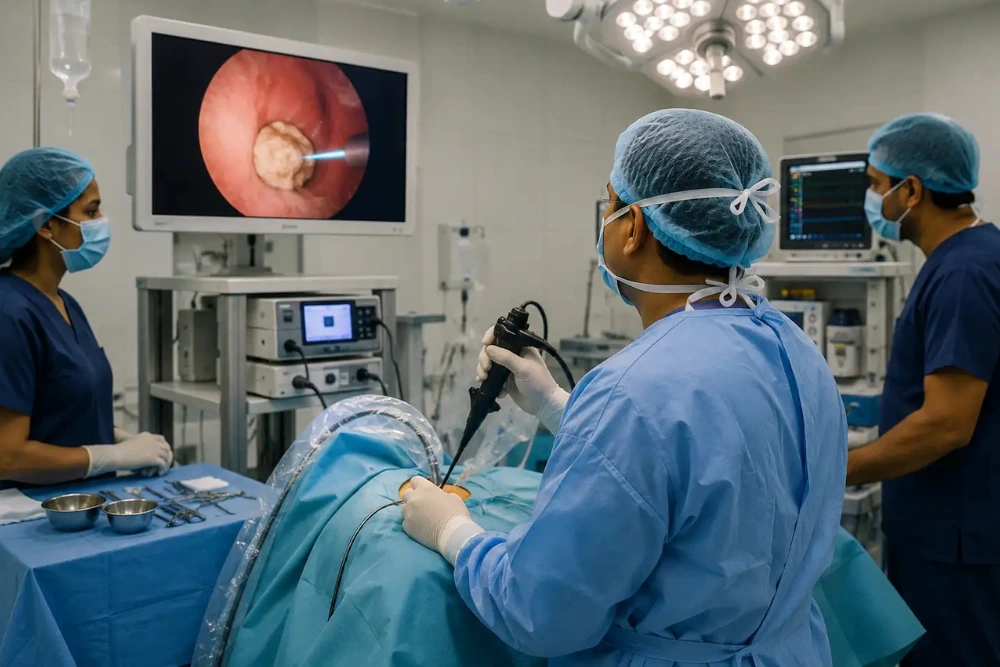
Urinary Stone Surgery
Minimally Invasive (Laser, RIRS, PCNL, ESWL)
Safe, minimally invasive treatment for kidney, ureter, and bladder stones — using modern techniques like laser lithotripsy, RIRS, and PCNL for faster relief and recovery.
Medically reviewed by Dr. S M Sarwar, General & Laparoscopic Surgeon • 15+ years experience • Updated
July 2026
30–90 min
Surgery Duration
1–2 days
Hospital Stay
1–3 weeks
Back to Normal Activity
OVERVIEW
What Are Urinary Stones?
Urinary stones are hard mineral deposits that form in the kidney, ureter, or bladder, often causing severe pain, blood in urine, or repeated infections when they block urine flow. Depending on the stone's size, location, and composition, treatment may involve Extracorporeal Shock Wave Lithotripsy (ESWL), Laser Ureteroscopy (URS), Retrograde Intrarenal Surgery (RIRS), Percutaneous Nephrolithotomy (PCNL), or Endoscopic Bladder Stone Surgery (Cystolitholapaxy). Most modern procedures are minimally invasive, using natural passages or tiny incisions to clear stones with faster healing and less discomfort than traditional open surgery.
CANDIDACY
Who Needs This?
Severe pain in the back or side, blood in urine, burning during urination, or recurrent urinary infections often point to a urinary stone. When a stone is too large to pass naturally, blocks urine flow, or keeps recurring, surgical treatment becomes the most reliable solution.
Kidney Stones
Ureteral Stones
Bladder Stones
Uric Acid Stones
Struvite Stones
Cystine Stones
BENEFITS
Benefits of Minimally Invasive Stone Surgery
✓
Minimal to no external incisions
✓
Less post-operative pain
✓
Reduced hospital stay
✓
Faster stone clearance
✓
Lower risk of complications
✓
Quicker return to daily activities
✓
High success rate with modern techniques
PROCEDURE
How Is It Performed?
1
Anesthesia
General or spinal anesthesia is administered so the procedure is completely pain-free.
2
Scope Insertion
A thin scope is passed through the natural urinary passage to reach the stone (or a small puncture is made for larger kidney stones).
3
Stone Fragmentation
A laser or other energy source breaks the stone into small fragments or dust.
4
Clearance & Closure
Fragments are removed or left to pass naturally, and a temporary stent may be placed to aid healing.
GOOD TO KNOW
As with any surgical procedure, urinary stone surgery carries some general risks. These are uncommon and are discussed in detail during your consultation:
•Infection or fever
•Bleeding
•Temporary stent-related discomfort
•Incomplete stone clearance requiring repeat treatment
•Reaction to anesthesia (screened for beforehand)
RECOVERY
What to Expect Afterward?
Day 0 — Surgery Day
Hospital stay of 1–2 days depending on the procedure; short rest period for anesthesia to wear off.
Days 3–7
Mild discomfort managed with prescribed pain relief; increased fluid intake encouraged.
Week 1–2
Return to light daily activities and desk work.
Week 2–3
Full recovery, guided by follow-up imaging and your surgeon's advice.
FAQ
Common Questions
No. The procedure is performed under anesthesia, so patients feel no pain during surgery. Mild discomfort afterward, especially if a stent is placed, is normal and manageable with medication.
Most patients stay 1–2 days, though this can vary depending on the specific procedure and stone complexity.
Yes, stones can recur, so your surgeon may recommend dietary changes and follow-up monitoring to reduce the risk.
Want to know more? Read the complete guide to urinary stone diagnosis, treatment options & recovery.
This page is for general information only and does not replace an in-person medical consultation. Treatment recommendations vary by individual case — please book a consultation with Dr. S M Sarwar for personalized advice.