

Understanding Anorectal Diseases
Anorectal diseases are among the most common health conditions worldwide, affecting millions of people regardless of age or gender. Conditions such as piles (hemorrhoids), anal fissures, anal fistulas, and pilonidal sinus can cause pain, bleeding, swelling, itching, and significant discomfort.
Despite being common and highly treatable, many people delay seeking medical attention because they feel embarrassed discussing symptoms involving the anal region. Unfortunately, postponing treatment often allows the condition to worsen, making recovery more difficult and increasing the risk of complications.
With modern diagnostic techniques and advanced treatment options, most anorectal diseases can be managed effectively when diagnosed early.
Why Do People Feel Embarrassed?
Many people believe anorectal diseases are private issues that should not be discussed openly. Fear of medical examinations, anxiety about surgery, and social stigma often prevent patients from visiting a specialist.
However, anorectal diseases are simply medical conditions—just like diabetes, hypertension, or gallbladder disease. Healthcare professionals diagnose and treat these problems every day in a professional and confidential environment.
Ignoring symptoms does not make them disappear. In many cases, delaying treatment allows the disease to progress and may require more extensive treatment later.
Common Anorectal Conditions
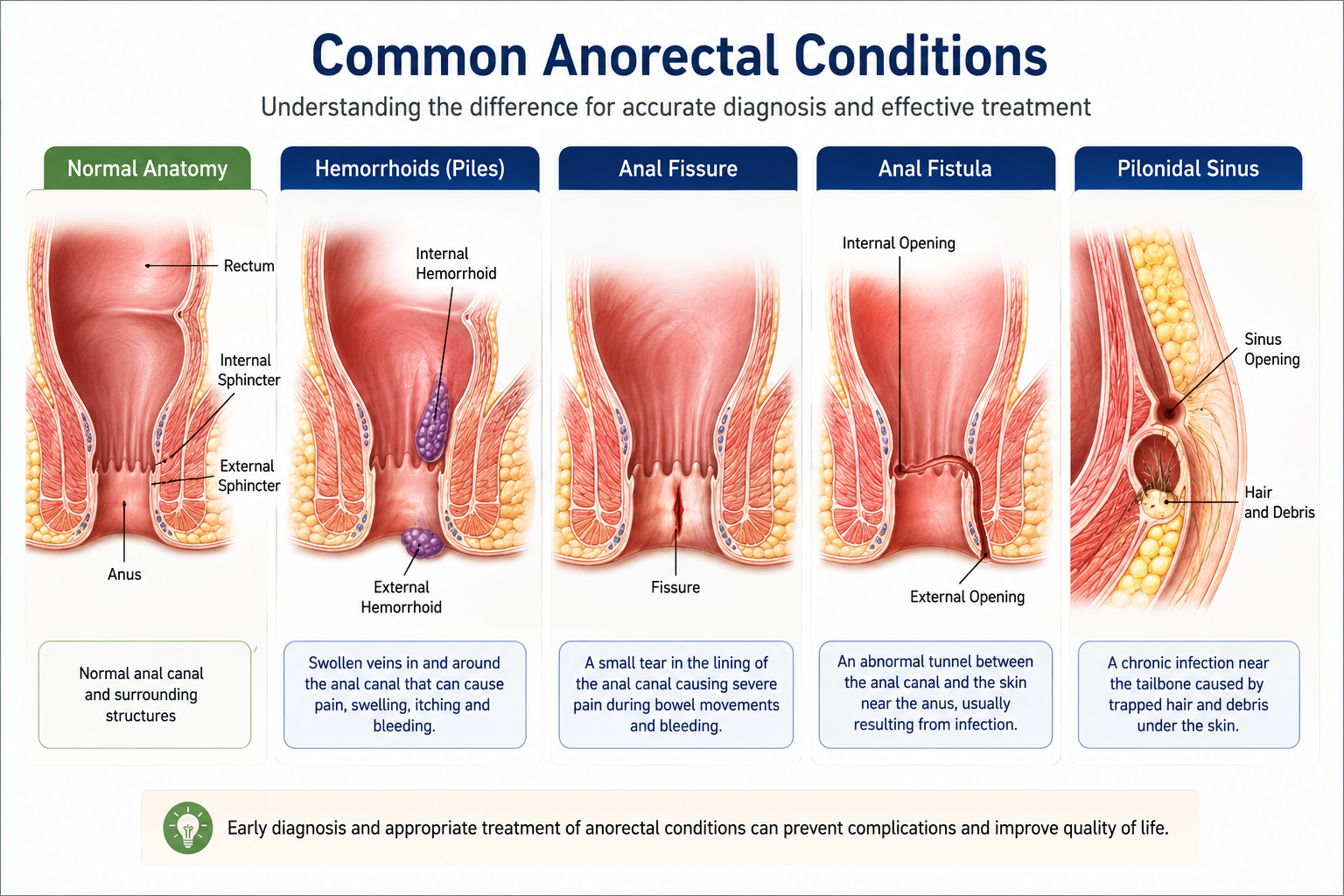
Several conditions can affect the anal and rectal region, each requiring accurate diagnosis and appropriate management.
Piles (Hemorrhoids)
Swollen veins around the anus or lower rectum that may cause bleeding, itching, swelling, or discomfort during bowel movements.
Anal Fissure
A small tear in the lining of the anal canal that often causes sharp pain and bleeding while passing stool.
Anal Fistula
An abnormal tunnel between the anal canal and the surrounding skin, usually developing after an infection or abscess.
Pilonidal Sinus
A chronic infection near the tailbone caused by trapped hair beneath the skin, resulting in pain, swelling, and discharge.
Although these conditions share similar symptoms, each requires a different treatment approach.
Symptoms You Should Never Ignore
Early symptoms may seem mild, but they should never be overlooked.
Seek medical evaluation if you experience:
✔ Rectal bleeding
✔ Pain during bowel movements
✔ Persistent itching
✔ Swelling or a lump around the anus
✔ Pus or discharge
✔ Recurrent abscess
✔ Difficulty sitting comfortably
✔ Persistent discomfort lasting several days
Early diagnosis often leads to simpler treatment and better long-term outcomes.
Why Early Treatment Matters
Treating anorectal diseases in their early stages can significantly reduce discomfort and prevent complications.
Early medical care may help:
- Prevent chronic pain and infection
- Reduce the risk of abscess formation
- Avoid excessive bleeding
- Minimize the need for more complex surgery
- Support faster recovery
- Improve overall quality of life
Modern treatment techniques focus on minimizing discomfort while helping patients return to their normal activities as quickly as possible.
Modern Treatment Options
Treatment depends on the specific diagnosis and the severity of the condition.
Your treatment plan may include:
- Dietary and lifestyle modifications
- Medications
- Office-based procedures
- Minimally invasive surgical techniques
- Laser treatment (where appropriate)
- Conventional surgery for advanced disease
Every patient receives an individualized treatment plan based on clinical evaluation and overall health.
Simple Lifestyle Changes That Can Help
Healthy daily habits play an important role in preventing many anorectal problems and reducing the risk of recurrence.
Helpful lifestyle measures include:
✔ Eating a high-fiber diet
✔ Drinking plenty of water
✔ Regular physical activity
✔ Avoiding prolonged sitting
✔ Preventing constipation
✔ Maintaining good personal hygiene
These habits support healthy bowel movements and reduce strain during defecation.

Recovery After Treatment
Recovery depends on the condition and the type of treatment performed. Many patients return to light daily activities within a short period after modern minimally invasive procedures.
Following post-treatment instructions regarding medications, wound care, diet, and follow-up appointments helps ensure a smooth recovery and lowers the chance of recurrence.
Most importantly, patients often experience a significant improvement in comfort, confidence, and quality of life after successful treatment.

When Should You Seek Immediate Medical Attention?
Do not delay medical care if you experience:
🚩 Heavy rectal bleeding
🚩 Severe anal pain
🚩 Fever with swelling around the anus
🚩 Persistent pus or foul-smelling discharge
🚩 A painful lump that continues to enlarge
🚩 Recurrent abscess
🚩 Symptoms that do not improve with basic care
Prompt evaluation can prevent serious complications and improve treatment outcomes.
Frequently Asked Questions
Are anorectal diseases common?
Yes. They are among the most common conditions affecting the digestive tract and can occur at any age.
Should I feel embarrassed about seeking treatment?
No. These are routine medical conditions that healthcare professionals manage every day with complete privacy and professionalism.
Can anorectal diseases be treated without surgery?
Some conditions respond well to medication and lifestyle changes, while others may require minimally invasive or surgical treatment depending on their severity.
Does delaying treatment make the condition worse?
In many cases, yes. Delayed treatment may increase the risk of infection, chronic pain, recurrent disease, and more complex treatment.
Can these conditions be prevented?
Although not all anorectal diseases are preventable, maintaining healthy bowel habits, eating a high-fiber diet, staying hydrated, and seeking early medical care can reduce the risk of many common conditions.
Consult an Experienced Specialist Today
There is no need to live with pain, discomfort, or embarrassment. Anorectal diseases are common medical conditions, and early diagnosis often leads to simpler treatment and faster recovery.
If you are experiencing rectal bleeding, persistent pain, swelling, itching, discharge, or any other concerning symptoms, seek expert medical advice without delay. A timely evaluation can help identify the underlying cause and ensure the most appropriate treatment for your condition.
📞 Book Your Consultation Today
⚠ Medical Disclaimer
This article is intended for educational purposes only and should not be considered a substitute for professional medical advice, diagnosis, or treatment. Always consult a qualified surgeon regarding any medical condition or treatment decisions.


