
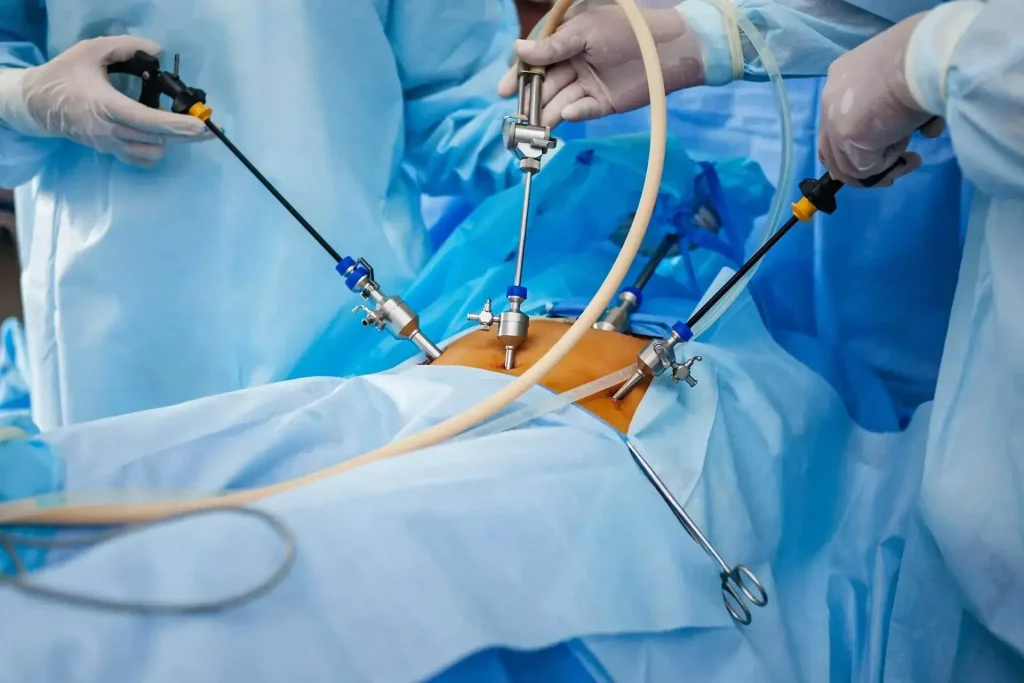
Laparoscopic Ovarian Tumor Surgery: At a Glance
Ovarian tumors are among the most common gynecological conditions affecting women of all ages. While many ovarian tumors are benign and may not cause noticeable symptoms in their early stages, some continue to grow, causing pelvic pain, abdominal discomfort, menstrual irregularities, or pressure on nearby organs. In certain cases, surgery becomes the safest and most effective treatment option.
Advances in minimally invasive surgery have transformed the management of ovarian tumors. Today, laparoscopic ovarian tumor surgery is considered one of the safest and most effective surgical techniques available. Using small incisions, a high-definition camera, and specialized surgical instruments, surgeons can remove ovarian tumors with greater precision while minimizing trauma to surrounding tissues.
Compared with traditional open surgery, laparoscopic surgery offers significantly less postoperative pain, smaller scars, reduced blood loss, a shorter hospital stay, and a much faster recovery. Whenever medically appropriate, surgeons also aim to preserve healthy ovarian tissue, helping maintain hormonal function and fertility, particularly in younger women.
What Is an Ovarian Tumor and Why Is Surgery Needed?
The ovaries are two small reproductive organs located on either side of the uterus. Their primary functions are producing eggs and secreting important hormones such as estrogen and progesterone. An ovarian tumor refers to an abnormal growth that develops within or on the surface of an ovary. These growths may contain fluid, solid tissue, or a combination of both.
Most ovarian tumors are non-cancerous (benign), especially in younger women. However, some tumors continue to enlarge, cause persistent symptoms, or require further investigation to rule out malignancy. In such situations, surgical removal provides both treatment and an accurate diagnosis.
Your gynecological surgeon may recommend surgery if the tumor causes persistent symptoms, continues to increase in size, appears suspicious on imaging studies, or poses a risk of complications such as ovarian torsion or rupture.
Surgery may be recommended if you experience:
✔ Persistent pelvic pain or lower abdominal discomfort
✔ An ovarian cyst or tumor that continues to grow
✔ Pressure on the bladder or bowel causing urinary or bowel symptoms
✔ Ovarian torsion (twisting of the ovary), which is a surgical emergency
✔ Rupture of the ovarian cyst causing sudden severe pain
✔ Uncertain diagnosis requiring pathological examination
✔ Failure of conservative treatment or observation
Early surgical treatment often prevents future complications while preserving as much healthy ovarian tissue as possible.
What Is Laparoscopic Surgery?
Laparoscopic surgery, often referred to as keyhole surgery, is a minimally invasive surgical technique performed through several very small incisions instead of one large abdominal incision.
During the procedure, the surgeon inserts a tiny high-definition camera called a laparoscope into the abdomen. The camera projects magnified images onto a monitor, allowing the surgeon to perform delicate surgical maneuvers with exceptional precision using specially designed instruments.
Because the abdominal muscles remain largely intact, patients generally experience significantly less pain, minimal blood loss, lower infection rates, and much quicker recovery compared with conventional open surgery.
Laparoscopic surgery has become the preferred treatment option for many benign ovarian tumors due to its excellent safety profile and outstanding cosmetic results.
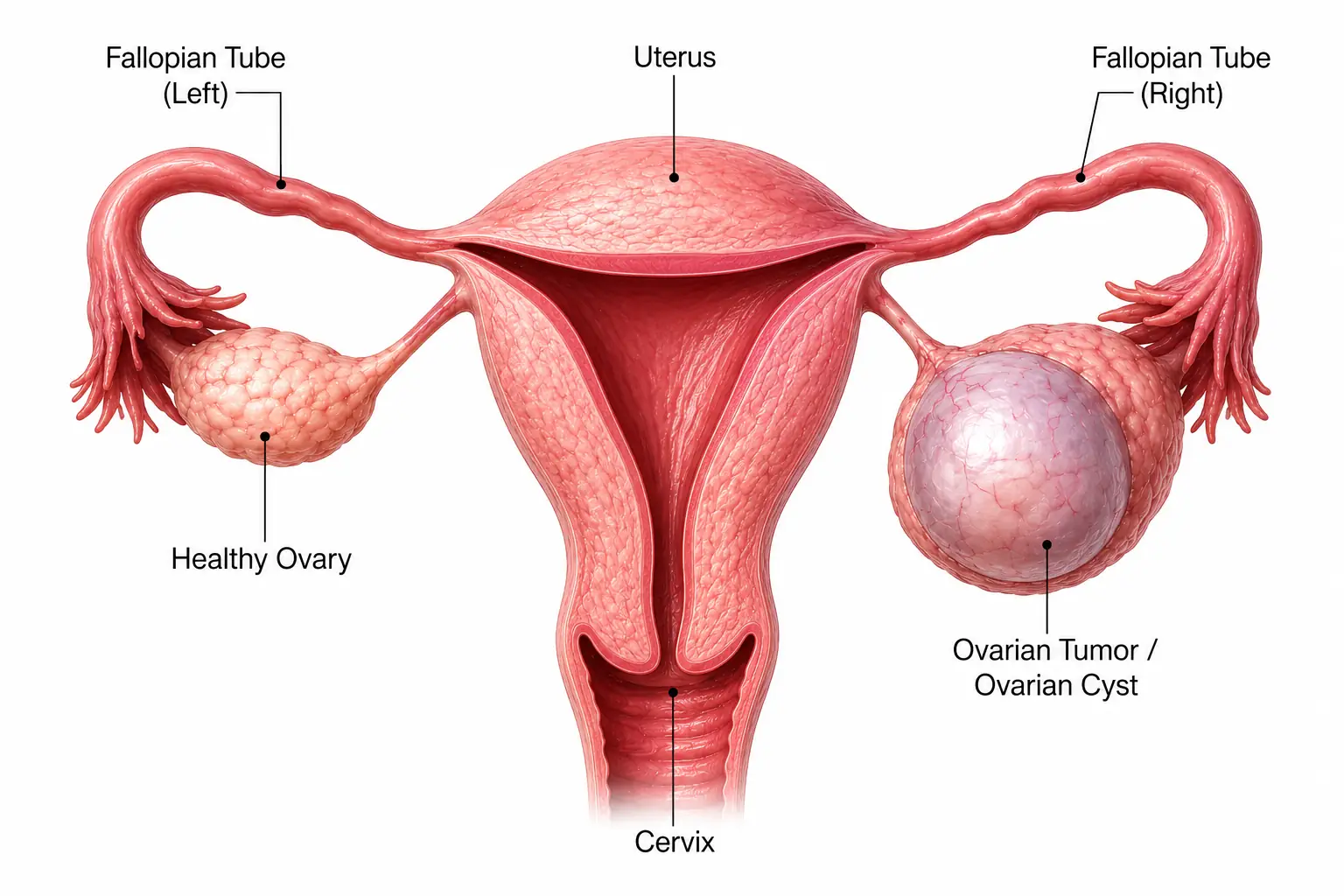
Common Types of Ovarian Tumors
Ovarian tumors vary considerably in their appearance, behavior, and treatment approach. Most ovarian masses detected in women are benign, although every ovarian tumor requires careful medical evaluation.
Some of the most commonly encountered ovarian tumors include:
Functional Ovarian Cysts
These are the most common ovarian cysts and usually develop during the normal menstrual cycle. Many disappear naturally without treatment.
Dermoid Cysts (Mature Cystic Teratomas)
These benign tumors may contain different tissue types such as hair, fat, or skin. Because they continue growing, surgical removal is often recommended.
Endometriomas
Often called “chocolate cysts,” these cysts develop in women with endometriosis and may cause severe pelvic pain and fertility problems.
Cystadenomas
These benign tumors arise from the ovarian surface and may become very large over time, producing abdominal discomfort or pressure symptoms.
Benign Solid Ovarian Tumors
Although non-cancerous, these tumors sometimes require removal because of increasing size or uncertainty regarding diagnosis.
Tumors Requiring Further Evaluation
Certain ovarian masses have imaging features that require additional investigations to exclude ovarian cancer. Early diagnosis is essential for the best possible outcome.
Common Symptoms of Ovarian Tumors
Small ovarian tumors often produce no symptoms and may be discovered incidentally during routine pelvic examinations or ultrasound scans.
As tumors enlarge, patients may begin experiencing various symptoms depending on their size and location.
Common symptoms include:
✔ Persistent pelvic pain
✔ Lower abdominal heaviness
✔ Abdominal bloating
✔ Swelling or enlargement of the abdomen
✔ Irregular menstrual cycles
✔ Pain during sexual intercourse
✔ Frequent urination due to bladder pressure
✔ Constipation caused by pressure on the bowel
✔ Feeling full quickly while eating
✔ Sudden severe pelvic pain (possible ovarian torsion or cyst rupture)
Persistent symptoms should never be ignored. Early evaluation allows appropriate treatment before serious complications develop.
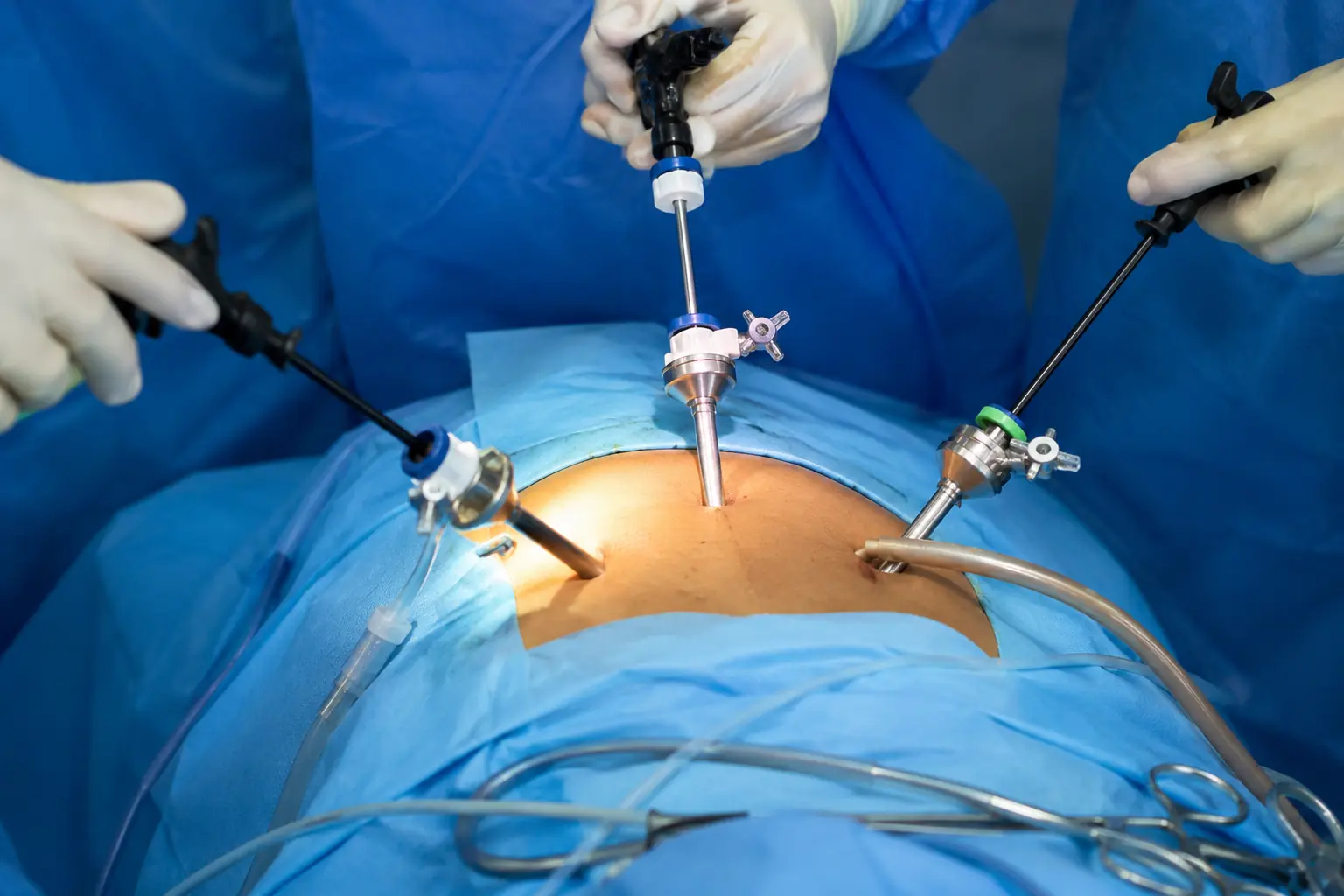
Key Benefits of Laparoscopic Ovarian Tumor Surgery
Laparoscopic ovarian tumor surgery has become the preferred treatment option for many women because it combines excellent surgical outcomes with a faster and more comfortable recovery. Unlike traditional open surgery, this minimally invasive technique uses several small incisions instead of one large abdominal cut, allowing surgeons to remove the tumor with remarkable precision while minimizing damage to surrounding tissues.
Another major advantage of laparoscopic surgery is its ability to preserve healthy ovarian tissue whenever possible. This is especially important for women who wish to maintain their hormonal function and future fertility. With modern laparoscopic technology and experienced surgical techniques, many benign ovarian tumors can be removed while leaving the healthy ovary intact.
Patients also experience significantly less postoperative pain, reduced blood loss, and a much lower risk of wound-related complications. Since recovery is quicker, most women can return to their normal daily activities within a short period, making laparoscopic surgery both a safe and convenient option.
Key Benefits
✔ Small incisions with minimal scarring
✔ Less postoperative pain
✔ Reduced blood loss
✔ Lower risk of infection
✔ Faster hospital discharge
✔ Preservation of healthy ovarian tissue whenever possible
✔ Quicker return to daily activities
✔ Better cosmetic results
✔ Faster overall recovery
Who Is a Good Candidate for Laparoscopic Ovarian Surgery?
Not every ovarian tumor requires surgery. Small, simple cysts that produce no symptoms may only need regular monitoring. However, when an ovarian tumor becomes larger, causes persistent discomfort, or appears suspicious during imaging, laparoscopic surgery may be the most appropriate treatment option.
Women with persistent pelvic pain, recurrent ovarian cysts, rapidly enlarging tumors, or complications such as ovarian torsion often benefit from minimally invasive surgery. The decision is based on several factors, including the patient’s age, medical history, fertility goals, imaging findings, and the characteristics of the ovarian mass.
An experienced gynecological surgeon will carefully evaluate each patient before recommending surgery to ensure the safest and most effective treatment approach.
Laparoscopic surgery is commonly recommended for patients with:
✔ A confirmed ovarian cyst or tumor on ultrasound
✔ Persistent pelvic pain
✔ Increasing tumor size during follow-up
✔ Suspicion of ovarian torsion
✔ Risk of cyst rupture
✔ Tumors requiring tissue diagnosis
✔ Failure of conservative treatment
What Tests Are Needed Before Surgery?
Before surgery, your surgeon will perform a thorough evaluation to confirm the diagnosis, assess your overall health, and plan the safest surgical approach. These investigations also help determine whether the ovarian tumor is likely to be benign or requires additional assessment.
A pelvic ultrasound is usually the first and most important imaging study because it provides detailed information about the size, appearance, and location of the ovarian mass. Depending on the findings, additional imaging such as CT or MRI may be recommended.
Blood investigations are also performed to evaluate general health and, when appropriate, measure tumor markers such as CA-125. Although these tests do not diagnose ovarian cancer on their own, they provide valuable information when interpreted alongside imaging findings.
Common preoperative investigations include:
✔ Pelvic ultrasound (transvaginal or abdominal)
✔ Complete blood count (CBC)
✔ Blood grouping (if required)
✔ CA-125 or other tumor markers (when indicated)
✔ Pregnancy test (where appropriate)
✔ ECG
✔ Chest X-ray (selected patients)
✔ CT scan or MRI (if necessary)
These evaluations allow your surgical team to develop an individualized treatment plan while minimizing potential surgical risks.

Is Laparoscopic Ovarian Surgery Painful?
No. Laparoscopic ovarian surgery is performed under general anesthesia, meaning patients remain completely asleep and do not feel any pain during the operation.
Following surgery, it is normal to experience mild discomfort around the incision sites or temporary abdominal bloating caused by the gas used during laparoscopy. These symptoms usually improve within a few days and can be effectively controlled with prescribed pain medication.
Most patients find that postoperative pain is considerably less severe than after traditional open surgery.
How Long Does Recovery Take?
Recovery after laparoscopic ovarian tumor surgery is generally much faster than recovery following open abdominal surgery. Many patients begin walking within a few hours after the procedure and are discharged from the hospital within one or two days.
Although individual recovery varies depending on the complexity of the surgery and the patient’s overall health, most women recover quickly and resume their normal routines within a short period.
Typical recovery timeline
✔ Hospital discharge within 24–48 hours
✔ Walking on the day of surgery or the following day
✔ Light daily activities within 2–3 days
✔ Return to office work within 1 week
✔ Full recovery within 1–2 weeks
Post-Surgery Care Instructions
Proper postoperative care plays an important role in ensuring a smooth recovery and reducing the risk of complications.
Patients are encouraged to remain physically active with gentle walking while avoiding strenuous exercise or heavy lifting until advised by their surgeon. Keeping the incision sites clean and dry also helps promote proper wound healing.
A healthy diet rich in fiber, together with adequate hydration, can prevent constipation during recovery and improve overall comfort.
After surgery, patients should:
✔ Take medications exactly as prescribed
✔ Keep incision sites clean and dry
✔ Avoid heavy lifting for several weeks
✔ Eat a balanced, fiber-rich diet
✔ Drink plenty of water
✔ Walk regularly
✔ Attend scheduled follow-up appointments
When Should You See a Doctor Immediately?
Although complications are uncommon, patients should seek immediate medical attention if they develop any concerning symptoms after surgery.
⚠ Severe abdominal pain
⚠ High fever
⚠ Persistent vomiting
⚠ Heavy vaginal bleeding
⚠ Increasing redness or swelling around the incision
⚠ Pus or discharge from the wound
⚠ Difficulty passing urine
⚠ Shortness of breath
Early medical evaluation can prevent serious complications and ensure prompt treatment.
Frequently Asked Questions
How long does laparoscopic ovarian tumor surgery take?
Most procedures are completed within 30–60 minutes, depending on the size and complexity of the ovarian tumor.
Is laparoscopic ovarian surgery painful?
No. The surgery is performed under general anesthesia. Mild soreness afterward is normal and usually improves within a few days.
How long will I stay in the hospital?
Most patients return home within 24–48 hours, provided recovery is uncomplicated.
Will surgery affect my fertility?
Whenever possible, surgeons preserve healthy ovarian tissue. The effect on fertility depends on the type, size, and location of the tumor.
When can I return to normal activities?
Most women resume light daily activities within a few days and return to their regular routine within 1–2 weeks.
Is laparoscopic ovarian tumor surgery safe?
Yes. When performed by an experienced gynecological surgeon, laparoscopic ovarian tumor surgery is considered a safe, effective, and internationally accepted minimally invasive procedure with excellent outcomes.
Consult a Specialist Today
Ignoring persistent pelvic pain, abdominal bloating, or an enlarging ovarian tumor may lead to complications such as ovarian torsion, cyst rupture, or delayed diagnosis of more serious conditions. Early consultation with an experienced gynecological surgeon allows timely diagnosis and appropriate treatment.
📞 Book your appointment today and take the first step toward safer treatment and a faster recovery.
Medical Disclaimer
This article is intended for educational and informational purposes only and should not be considered a substitute for professional medical advice, diagnosis, or treatment. Every patient is unique, and treatment recommendations vary depending on individual medical history, examination findings, and diagnostic results. Always consult a qualified healthcare professional for personalized medical advice. If you experience severe pain, fever, difficulty passing urine, heavy bleeding, or any medical emergency, seek immediate medical attention.


