

Gallbladder Surgery: At a Glance
Gallstones are a very common yet often neglected health condition today. Many patients initially experience mild discomfort or pain, but over time it can lead to severe abdominal pain, indigestion, nausea, and even infection.
With advancements in modern medicine, laparoscopic gallbladder surgery (cholecystectomy) is now widely recognized as a safe, minimally invasive, and highly effective treatment option worldwide.
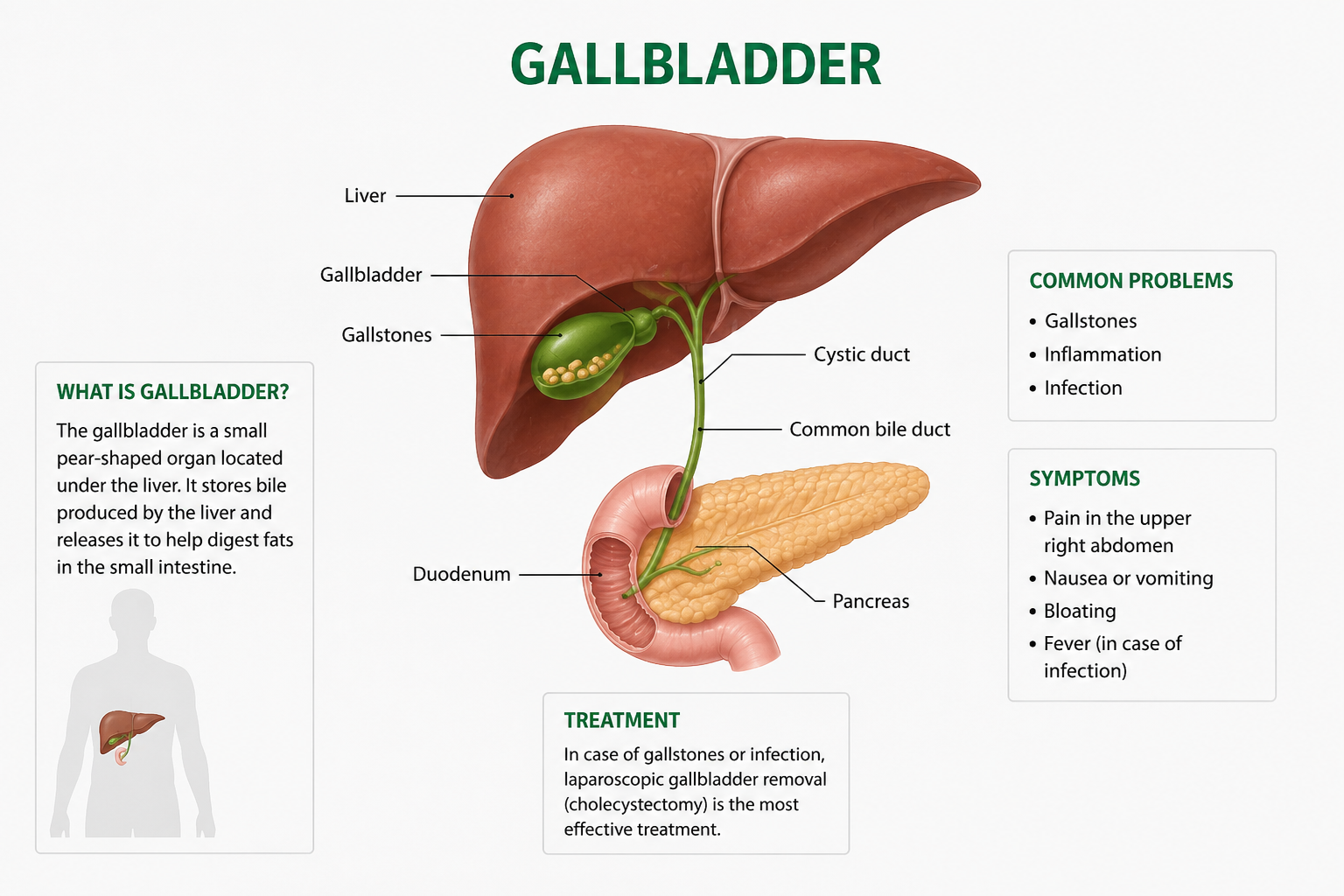
What is the Gallbladder and Why is Surgery Needed?
The gallbladder is a small organ located beneath the liver that stores bile and helps in digesting food, especially fatty meals.
When gallstones or infection develop, patients may experience:
✔ Severe pain on the right side of the abdomen
✔ Nausea or vomiting
✔ Difficulty digesting fatty foods
✔ Fever or infection
If these symptoms occur repeatedly, surgery becomes the most effective and permanent solution.
What is Laparoscopic Surgery?
Laparoscopic surgery is a modern minimally invasive procedure performed using small incisions. A camera and specialized instruments are used to carry out the surgery with high precision.
Since there are no large cuts, patients experience less pain and recover much faster.

Key Benefits of This Surgery
✔ Small incisions – minimal scarring
✔ Less pain
✔ Reduced blood loss
✔ Faster discharge from hospital
✔ Quick return to normal life
✔ Lower risk of infection

What Tests Are Needed Before Surgery?
Before surgery, several important tests are performed to assess the patient’s condition:
✔ Ultrasound
✔ Blood tests (CBC, LFT)
✔ Blood sugar test
✔ ECG (if required)
Is Laparoscopic Surgery Pain-Free?
The procedure is performed under general anesthesia, so patients do not feel any pain during surgery. Mild discomfort after surgery is normal and can be easily managed with medication.
How Long Does Recovery Take?
✔ Discharge within 24 hours
✔ Light activities within 2–3 days
✔ Full recovery within 1–2 weeks
Post-Surgery Care Instructions
✔ Take medications as prescribed
✔ Avoid heavy activities for a few days
✔ Maintain proper hygiene
✔ Follow up with your doctor as advised
When Should You See a Doctor Immediately?
🚨 Severe abdominal pain
🚨 Persistent vomiting
🚨 Fever
🚨 Serious digestive problems
Frequently Asked Questions
How long does laparoscopic gallbladder surgery take?
Most laparoscopic gallbladder surgeries (cholecystectomies) are completed within 30–60 minutes, depending on the patient’s condition and the complexity of the procedure.
Is laparoscopic gallbladder surgery painful?
The surgery itself is not painful because it is performed under general anesthesia. After the procedure, mild discomfort or soreness around the small incision sites is common, but it is usually well controlled with prescribed pain medication.
How long will I need to stay in the hospital?
Most patients are discharged within 24 hours after surgery. In many cases, patients can return home on the same day if they recover well and have no complications.
When can I return to my normal activities?
Most people can resume light daily activities within a few days and return to their normal routine within 1–2 weeks. Your surgeon will provide personalized advice based on your recovery and the nature of your work.
Is laparoscopic gallbladder surgery safe?
Yes. Laparoscopic cholecystectomy is a safe, effective, and globally accepted procedure for treating gallbladder disease. When performed by an experienced surgeon, it offers benefits such as smaller incisions, less pain, faster recovery, and a lower risk of complications compared with traditional open surgery.
Consult a Specialist Today
Ignoring gallbladder problems can lead to serious complications. If you are experiencing symptoms, consult an experienced surgeon without delay.
📞 Book your appointment today
Medical Disclaimer
This article is intended for educational and informational purposes only and should not be considered a substitute for professional medical advice, diagnosis, or treatment. Every patient is unique, and treatment recommendations vary depending on individual medical history, examination findings, and diagnostic results. Always consult a qualified healthcare professional for personalized medical advice. If you experience severe pain, fever, difficulty passing urine, heavy bleeding, or any medical emergency, seek immediate medical attention.


